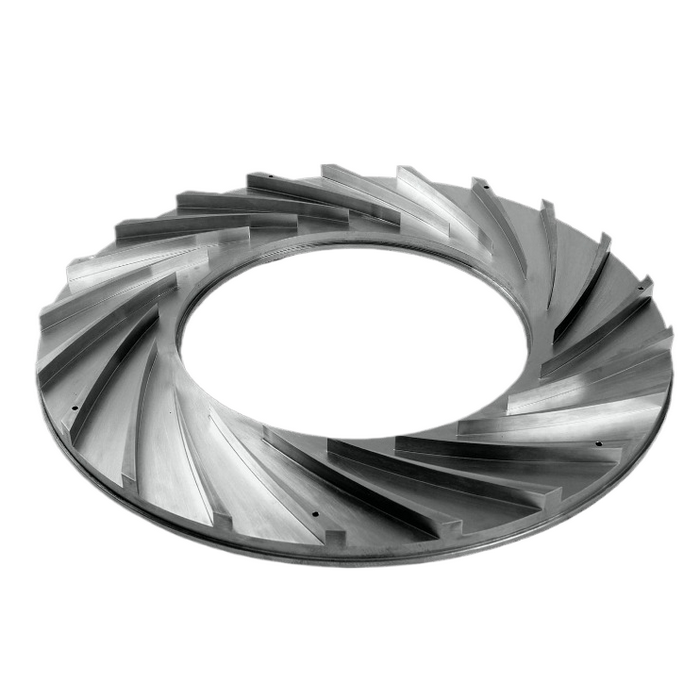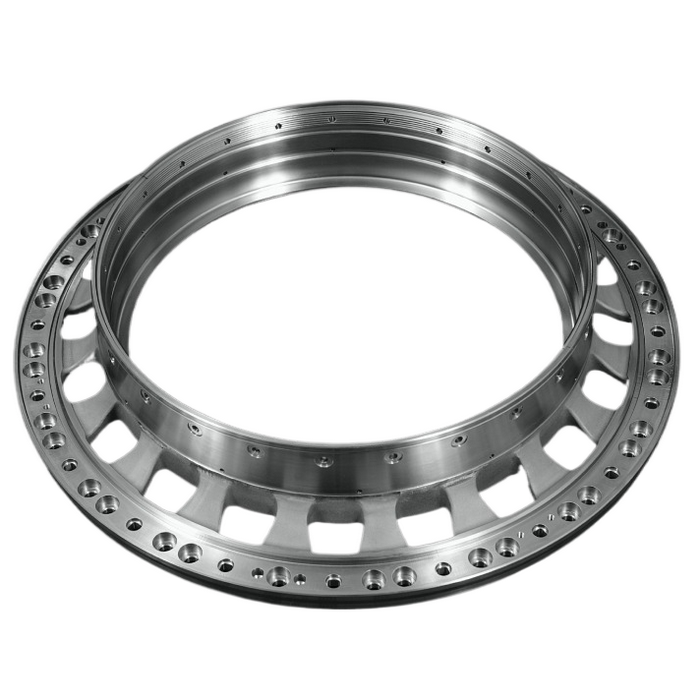
Aircraft engines Bearing Support
Bearing supports play an essential role in maintaining the stability, efficiency, and reliability of aircraft engines operating under extreme conditions involving high rotational speeds, elevated temperatures, intense vibration, and substantial aerodynamic forces.
Aircraft Engine Bearing Support
High-Precision Bearing Support for Aircraft Engine Applications
Product Overview
Aircraft Engine Bearing Supports are critical structural components used within modern aero engines to securely locate, support, and align rotating shafts and bearing assemblies. These precision-engineered components ensure accurate rotor positioning while transmitting operational loads from the engine shaft system to the engine casing structure.
Bearing supports play an essential role in maintaining the stability, efficiency, and reliability of aircraft engines operating under extreme conditions involving high rotational speeds, elevated temperatures, intense vibration, and substantial aerodynamic forces.
Designed to meet stringent aerospace requirements, bearing supports are manufactured using advanced materials and precision machining technologies to provide exceptional strength, dimensional stability, fatigue resistance, and long-term operational reliability.
These components are commonly found in turbofan engines, turbojet engines, turboprop engines, turboshaft engines, auxiliary power units (APUs), and various aerospace propulsion systems.
Function of Bearing Supports in Aircraft Engines
The primary function of a bearing support is to provide a rigid and accurately positioned mounting structure for engine bearings.
The bearing support assembly performs several critical tasks:
- Supports rotor shafts and bearing assemblies.
- Maintains precise shaft alignment.
- Transfers radial and axial loads to the engine structure.
- Accommodates thermal expansion during operation.
- Reduces vibration transmission.
- Enhances rotor dynamic stability.
- Protects bearings from excessive stress.
- Improves overall engine reliability.
Without properly designed bearing supports, engine shaft misalignment and excessive vibration can significantly reduce bearing life and engine performance.
Key Features
High Structural Strength
Engineered to withstand substantial radial and axial loads generated during engine operation.
Lightweight Design
Optimized aerospace structures reduce overall engine weight while maintaining strength and rigidity.
Excellent Fatigue Resistance
Designed for millions of operating cycles under varying flight conditions.
Thermal Stability
Maintains dimensional accuracy under extreme temperature fluctuations experienced during engine operation.
Vibration Control
Supports rotor dynamic performance and minimizes vibration transmission to surrounding structures.
Precision Machining
Manufactured to extremely tight tolerances to ensure accurate bearing positioning.
Typical Materials
Aircraft engine bearing supports are manufactured from high-performance aerospace materials selected according to engine operating requirements.
Titanium Alloy Ti-6Al-4V
Properties:
- High strength-to-weight ratio
- Excellent corrosion resistance
- Superior fatigue performance
- Lightweight construction
Applications:
- Fan bearing supports
- Intermediate bearing supports
- Compressor sections
Inconel 718
Properties:
- Outstanding high-temperature strength
- Excellent oxidation resistance
- Superior creep resistance
Applications:
- Hot section support structures
- Turbine bearing supports
- High-temperature engine zones
AISI 4340 Aerospace Steel
Properties:
- Exceptional toughness
- High fatigue strength
- Excellent wear resistance
Applications:
- Heavy-duty bearing support assemblies
- Rotor support systems
Stainless Steel Alloys
Common Grades:
- 15-5 PH
- 17-4 PH
- A286
Applications:
- Structural bearing carriers
- Auxiliary engine systems
- Aerospace mechanical assemblies
Manufacturing Process
Production of aircraft engine bearing supports involves advanced aerospace manufacturing technologies.
Typical processes include:
Material Certification
All raw materials are supplied with full aerospace traceability and certification.
CNC Machining
Five-axis CNC machining ensures exceptional dimensional accuracy and complex geometry production.
Heat Treatment
Specialized heat treatment processes optimize mechanical properties and fatigue performance.
Precision Grinding
Critical bearing interfaces are ground to aerospace-grade tolerances.
Non-Destructive Testing (NDT)
Inspection methods may include:
- Ultrasonic Testing (UT)
- Fluorescent Penetrant Inspection (FPI)
- Magnetic Particle Inspection (MPI)
- X-Ray Inspection
Final Inspection
Comprehensive dimensional verification using Coordinate Measuring Machines (CMM).
Technical Specifications
| Parameter | Specification |
|---|---|
| Product Type | Aircraft Engine Bearing Support |
| Industry | Aerospace |
| Material Options | Titanium, Inconel, Aerospace Steel |
| Manufacturing Process | CNC Machining |
| Surface Finish | Precision Ground |
| Heat Treatment | Available |
| Operating Temperature | Up to 700°C+ (material dependent) |
| Dimensional Tolerance | Aerospace Standard |
| Quality System | AS9100 / ISO 9001 |
| Traceability | Full Material Traceability |
| OEM Manufacturing | Available |
Applications
Turbofan Engines
Used to support fan shafts, low-pressure rotors, and high-pressure rotor systems.
Turbojet Engines
Provides structural support for high-speed rotating assemblies.
Turboprop Engines
Supports propeller drive shafts and gearbox systems.
Turboshaft Engines
Applied in helicopter propulsion systems and industrial gas turbines.
Auxiliary Power Units (APU)
Supports rotating components within aircraft auxiliary power systems.
Aerospace Test Equipment
Used in engine development and testing platforms requiring precision rotor support.
Performance Requirements
Aircraft engine bearing supports must satisfy demanding aerospace requirements:
High Fatigue Life
Designed to endure long-term cyclic loading conditions throughout the engine's operational life.
Thermal Expansion Management
Engineered to accommodate differential thermal growth between shafts, bearings, and surrounding structures.
Rotor Dynamic Stability
Supports precise rotor positioning to minimize vibration and maintain aerodynamic efficiency.
Weight Optimization
Lightweight designs contribute to improved fuel efficiency and aircraft performance.
Reliability
Designed for maximum operational safety and compliance with aviation standards.
Quality Assurance
Every aircraft engine bearing support undergoes strict quality control procedures including:
- Raw material verification
- Dimensional inspection
- Metallurgical testing
- Hardness testing
- Surface roughness inspection
- Non-destructive testing
- CMM measurement
- Final aerospace quality approval
Production can be performed according to:
- AS9100
- ISO 9001
- NADCAP requirements
- Customer aerospace specifications
Advantages
- Aerospace-grade materials
- High structural integrity
- Lightweight construction
- Excellent fatigue resistance
- High-temperature capability
- Precision-machined interfaces
- Long operational life
- Full traceability
- OEM and aftermarket support
- Custom engineering available
Conclusion
Aircraft Engine Bearing Supports are essential components that ensure the stability, alignment, and reliability of modern aerospace propulsion systems. Manufactured from advanced aerospace materials and produced using precision engineering technologies, these components provide exceptional performance under the most demanding operating conditions.
With high strength, excellent fatigue resistance, thermal stability, and precise dimensional control, aircraft engine bearing supports contribute directly to engine efficiency, safety, and long-term operational reliability across commercial, military, and industrial aerospace applications.
Related Products
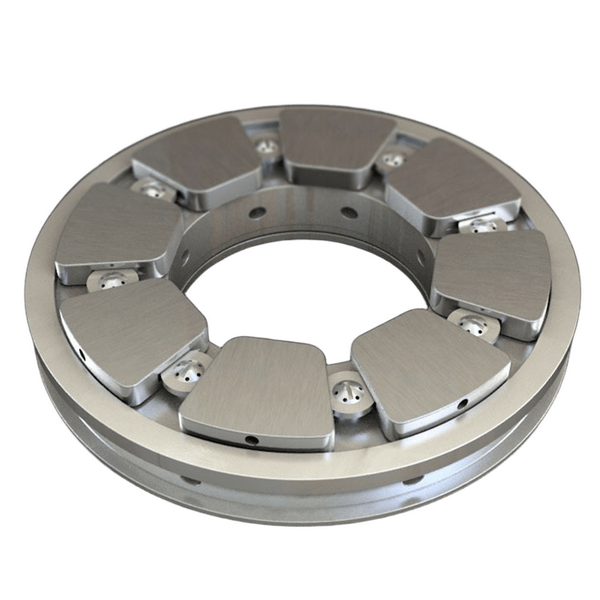
Compact Equalising Thrust Bearings
Learn More