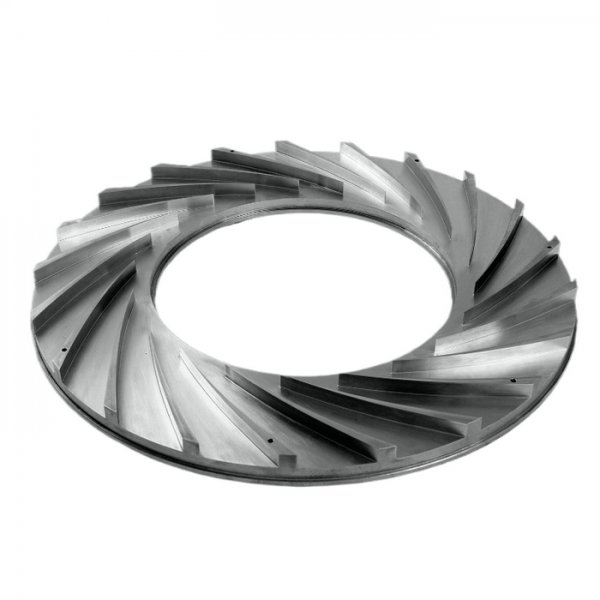
Aircraft Engine Diffuser
Whether utilized in commercial aircraft, military jet engines, helicopters, or industrial gas turbines, aircraft engine diffusers play an essential role in achieving optimal engine performance, fuel efficiency, and operational safety.
Product Overview
Aircraft Engine Diffuser
High-Performance Diffuser for Aircraft Engine Applications
Product Overview
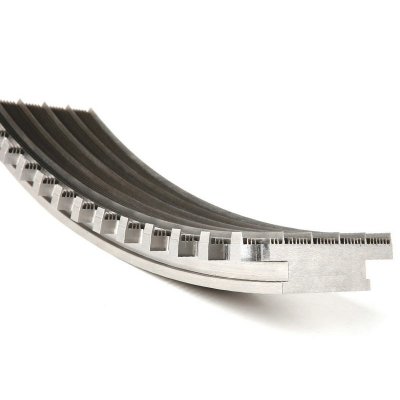
The Aircraft Engine Diffuser is a critical aerodynamic component located between the compressor and combustion section of a gas turbine engine. Its primary function is to convert the high-velocity airflow exiting the compressor into lower-velocity, higher-pressure airflow before entering the combustion chamber.
By efficiently reducing air velocity and increasing static pressure, the diffuser significantly improves combustion efficiency, fuel utilization, engine performance, and overall operating stability. Diffusers are essential components in modern turbofan, turbojet, turboprop, and turboshaft engines used in commercial aviation, military aircraft, helicopters, and industrial gas turbines.
Manufactured from advanced aerospace materials and produced using precision machining technologies, aircraft engine diffusers must withstand extreme temperatures, pressure variations, vibration, and aerodynamic loading throughout their service life.
Function of an Aircraft Engine Diffuser
In a gas turbine engine, compressed air exits the compressor at very high velocity. Directly feeding this air into the combustion chamber would result in unstable combustion and reduced efficiency.
The diffuser performs several important functions:
- Reduces airflow velocity.
- Converts kinetic energy into pressure energy.
- Increases static pressure before combustion.
- Improves fuel-air mixing.
- Enhances combustion stability.
- Reduces pressure losses.
- Optimizes engine thermal efficiency.
- Improves overall engine performance.
The diffuser is a key component in achieving high combustion efficiency and low fuel consumption.
Working Principle
Air leaving the final stage of the compressor enters the diffuser passage at high velocity.
As the airflow moves through the expanding diffuser geometry:
- Flow area gradually increases.
- Air velocity decreases.
- Static pressure increases.
- Flow becomes more uniform.
- Air enters the combustion chamber under optimal conditions.
This pressure recovery process is fundamental to efficient gas turbine operation.
Key Features
High Pressure Recovery
Optimized aerodynamic design maximizes pressure conversion efficiency.
Excellent Flow Distribution
Provides uniform airflow to combustion chambers, improving combustion quality.
Lightweight Construction
Designed to minimize engine weight without sacrificing structural integrity.
High Temperature Resistance
Capable of operating in demanding thermal environments adjacent to combustion systems.
Superior Fatigue Strength
Designed to withstand cyclic pressure and temperature loading throughout engine life.
Precision Manufacturing
Produced with extremely tight dimensional tolerances to maintain aerodynamic performance.
Diffuser Types
Annular Diffuser
Features:
- Compact design
- High pressure recovery
- Common in modern turbofan engines
Applications:
- Commercial jet engines
- Military fighter engines
Curved Wall Diffuser
Features:
- Improved airflow control
- Reduced flow separation
Applications:
- Advanced gas turbine engines
Dump Diffuser
Features:
- Short axial length
- Compact combustion system integration
Applications:
- Industrial gas turbines
- Auxiliary power units (APUs)
Vane Diffuser
Features:
- Enhanced pressure recovery
- Improved flow guidance
Applications:
- Specialized aerospace propulsion systems
Materials
Aircraft engine diffusers are manufactured from advanced aerospace-grade materials selected according to temperature and structural requirements.
Inconel 718
Properties:
- Excellent high-temperature strength
- Outstanding oxidation resistance
- Superior creep resistance
Applications:
- High-temperature diffuser sections
- Turbine-adjacent structures
Hastelloy Alloys
Properties:
- Exceptional corrosion resistance
- Excellent thermal stability
Applications:
- Advanced aerospace engines
- Industrial gas turbines
Titanium Alloys (Ti-6Al-4V)
Properties:
- Lightweight
- High strength-to-weight ratio
- Excellent fatigue resistance
Applications:
- Compressor diffuser assemblies
- Intermediate engine sections
Stainless Steel Aerospace Grades
Common Grades:
- A286
- 17-4 PH
- 15-5 PH
Applications:
- Structural diffuser components
- Moderate-temperature engine zones
Manufacturing Process
Aircraft engine diffusers require advanced aerospace manufacturing technologies.
Precision CNC Machining
Five-axis CNC machining ensures complex aerodynamic geometries and tight tolerances.
Investment Casting
Used for manufacturing intricate diffuser shapes while minimizing material waste.
Sheet Metal Fabrication
Applied to lightweight diffuser structures and duct assemblies.
Heat Treatment
Enhances mechanical properties and fatigue resistance.
Surface Finishing
Improves aerodynamic smoothness and corrosion resistance.
Non-Destructive Testing (NDT)
Inspection methods include:
- Fluorescent Penetrant Inspection (FPI)
- Ultrasonic Testing (UT)
- X-Ray Inspection
- Coordinate Measurement Inspection
Technical Specifications
| Parameter | Specification |
|---|---|
| Product Name | Aircraft Engine Diffuser |
| Component Type | Aerodynamic Flow Control Component |
| Application | Gas Turbine Engines |
| Materials | Inconel, Titanium, Stainless Steel |
| Manufacturing Process | CNC Machining / Casting |
| Operating Temperature | Up to 1000°C+ (design dependent) |
| Surface Finish | Aerospace Grade |
| Tolerance | Precision Aerospace Standards |
| Quality System | AS9100 / ISO 9001 |
| OEM Manufacturing | Available |
| Custom Engineering | Supported |
Applications
Commercial Aircraft Engines
Used in modern turbofan engines powering passenger and cargo aircraft.
Military Aircraft Engines
Supports high-performance propulsion systems requiring superior pressure recovery and combustion efficiency.
Helicopter Engines
Applied in turboshaft engines operating under demanding flight conditions.
Auxiliary Power Units (APU)
Provides efficient airflow management in aircraft auxiliary power systems.
Industrial Gas Turbines
Used in power generation and industrial propulsion systems derived from aerospace technology.
Aerospace Research Programs
Applied in engine development, testing, and advanced propulsion research.
Quality Assurance
Every aircraft engine diffuser undergoes comprehensive quality control procedures.
Inspection processes include:
- Material certification verification
- Dimensional inspection
- Aerodynamic profile verification
- Surface roughness measurement
- Metallurgical analysis
- Non-destructive testing
- Final aerospace approval
Manufacturing can comply with:
- AS9100 Aerospace Quality Management System
- ISO 9001
- NADCAP Special Process Requirements
- Customer-Specific Aerospace Standards
Advantages
- High pressure recovery efficiency
- Optimized airflow distribution
- Lightweight aerospace design
- Excellent fatigue resistance
- High-temperature capability
- Precision aerodynamic geometry
- Reduced fuel consumption
- Enhanced combustion stability
- Long operational service life
- OEM and aftermarket support
Conclusion
The Aircraft Engine Diffuser is a vital aerodynamic component that directly influences engine efficiency, combustion performance, and overall propulsion system reliability. Through advanced aerodynamic design, precision manufacturing, and aerospace-grade materials, modern diffusers provide outstanding pressure recovery and airflow control in the most demanding aviation environments.
Whether utilized in commercial aircraft, military jet engines, helicopters, or industrial gas turbines, aircraft engine diffusers play an essential role in achieving optimal engine performance, fuel efficiency, and operational safety.
Technical Specifications
Technical Specifications
Parameter Specification
Product Name Aircraft Engine Diffuser
Component Type Aerodynamic Flow Control Component
Application Gas Turbine Engines
Materials Inconel, Titanium, Stainless Steel
Manufacturing Process CNC Machining / Casting
Operating Temperature Up to 1000°C+ (design dependent)
Surface Finish Aerospace Grade
Tolerance Precision Aerospace Standards
Quality System AS9100 / ISO 9001
OEM Manufacturing Available
Why Choose Dawopu Group
OEM Quality
Manufactured to meet OEM specifications
Material Quality
High-grade materials for durability
Fast Delivery
Reliable shipping to global destinations
Certified Quality
ISO 9001:2025
Expert Support
Technical support available
Global Experience
Serving customers worldwide
Related Products
Frequently Asked Questions
Need This Part?
Contact our sales team for competitive pricing and fast delivery.