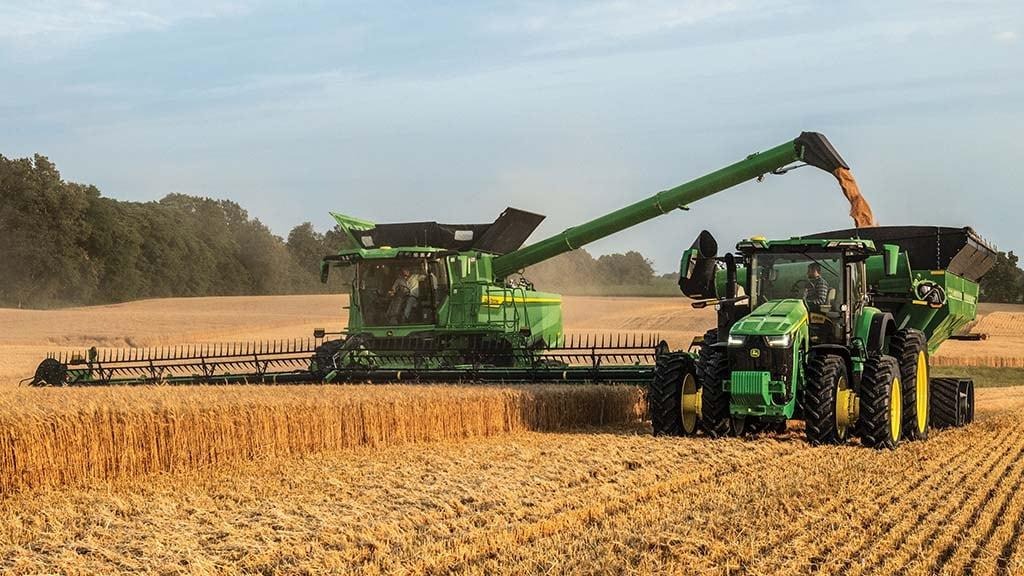
South America’s Agricultural Machinery Boom and the Rising Global Spare Parts Market: How Dawopu Is Entering the Supply Chain
Introduction: A Region Driving Global Agriculture
South America has become one of the most important agricultural powerhouses in the world. Countries such as Brazil, Argentina, Paraguay, Uruguay, and Bolivia are now central to global exports of soybeans, corn, wheat, sugarcane, and cotton. This transformation has been driven not only by land expansion and agribusiness investment, but also by rapid mechanization.
Modern large-scale farming in South America relies heavily on high-horsepower tractors, precision seeders, and advanced harvesting systems. As a result, the region has also developed one of the fastest-growing markets for agricultural machinery spare parts. Global OEM brands such as John Deere, Case IH, New Holland, and Claas dominate the installed equipment base, but an equally important ecosystem has emerged around replacement components, wear parts, and aftermarket manufacturing.
In this evolving landscape, new international suppliers like Dawopu are beginning to position themselves as reliable partners in the global agricultural spare parts supply chain.
1. South America’s Large-Scale Farming Model
Unlike many regions where farms are relatively small, South America is defined by large-scale agricultural operations. In Brazil’s Mato Grosso, Argentina’s Pampas region, and Paraguay’s eastern agricultural belt, farm sizes often range from hundreds to thousands of hectares.
These large farms depend heavily on mechanization because manual labor is insufficient for operational scale. A single farm may operate:
- High horsepower tractors (200–600 HP)
- Air seeders and precision planters
- Large combine harvesters
- Fertilizer spreaders and sprayers
This equipment operates under extreme conditions—long working hours, abrasive soil conditions, and seasonal pressure during planting and harvest windows. As a result, wear parts and replacement components become essential consumables.
2. Dominant Agricultural Machinery Brands in South America
The South American agricultural machinery market is dominated by global OEMs with strong local distribution networks.
Key OEM Brands:
- John Deere
- Case IH
- New Holland Agriculture
- Massey Ferguson
- CLAAS
- Valtra
Among these, John Deere holds the largest installed base in Brazil and Argentina, while Case IH and New Holland have strong penetration in soybean and corn production regions.
However, OEM dominance does not eliminate aftermarket demand. In fact, it increases it.
3. Why Spare Parts Demand Is Exploding
The growth of spare parts consumption in South America is driven by several structural factors:
1) High utilization intensity
Machines operate 12–18 hours per day during peak seasons.
2) Long transportation distances
Farms are far from service centers, delaying OEM maintenance.
3) Cost pressure
Farmers increasingly look for cost-effective replacement options instead of original OEM parts.
4) Aging equipment fleets
A large portion of machinery is 5–15 years old, requiring frequent maintenance.
5) Soil abrasiveness
Especially in Brazil and Argentina, soil conditions accelerate wear on discs, openers, and bearings.
This creates a strong and continuous demand for aftermarket spare parts, particularly in three categories:
- Seeding system components
- Wear-resistant soil engagement parts
- Hydraulic and mechanical linkage components
4. The Most Demanded Spare Parts Categories
Across South America, the following spare parts categories are in highest demand:
Seeding System Parts
- Disc openers
- Gauge wheels
- Closing wheels
- Seed tubes
- Scrapers
- Seed boots
Wear Parts
- Soil engaging discs
- Furrow openers
- Coulters
- Cutting blades
- Wear plates
Structural & Mechanical Parts
- Bushings
- Pins and shafts
- Bearing housings
- Rubber dampers
- Hydraulic components
These components are often compatible across multiple OEM platforms, which makes them ideal for standardized manufacturing and export.
5. Brazil and Argentina: The Core Markets
Brazil: The Giant Market
Brazil is the largest agricultural machinery market in the region. The country’s soybean and sugarcane production systems require heavy mechanization.
Key characteristics:
- Very large farm sizes
- Strong presence of John Deere and Case IH
- High consumption of wear parts
- Increasing adoption of precision agriculture
Brazil is also a major importer of aftermarket components due to its vast machine fleet.
Argentina: Seeder-Centric Agriculture
Argentina is known for its no-till farming system, making seeders and drilling systems extremely important.
Key characteristics:
- Advanced no-till planting technology
- Heavy reliance on air seeders
- Strong aftermarket culture
- High demand for replacement opener discs and closing systems
Argentina is particularly important for companies focusing on seeding equipment spare parts.
6. The Role of Aftermarket Suppliers
The agricultural aftermarket is increasingly globalized. Many farmers and distributors now source parts from international suppliers rather than OEM channels.
The key advantages of aftermarket suppliers include:
- Lower cost (30%–60% of OEM price)
- Faster delivery for non-critical parts
- Availability of compatible parts for older machines
- Flexible customization options
This shift has opened opportunities for manufacturers from Asia, especially China, to enter the South American supply chain.
7. Dawopu’s Position in the Global Supply Chain
Within this evolving ecosystem, Dawopu is emerging as a specialized supplier of agricultural machinery spare parts, focusing on:
- CNC-machined components
- Rubber damping parts
- Wear-resistant steel components
- Seeder system replacement parts
- Custom agricultural machinery parts
Dawopu’s strategy is aligned with global demand trends: rather than competing directly with OEM machinery, it focuses on high-frequency replacement components that keep machines operating efficiently.
In South America, this is particularly relevant because farmers prioritize uptime during planting and harvest seasons. Even a short downtime can result in significant yield loss.
By supplying reliable aftermarket components, Dawopu positions itself as a cost-efficient alternative source for distributors and agricultural service companies.
8. Competitive Landscape in Spare Parts Manufacturing
The global agricultural spare parts market is highly competitive. Key suppliers include:
- OEM manufacturers (John Deere, Case IH, etc.)
- European aftermarket specialists
- Local South American manufacturers
- Asian OEM-compatible manufacturers
European brands often dominate premium aftermarket segments, while Asian manufacturers compete in mid-range and cost-effective categories.
Dawopu’s competitive advantage lies in:
- Engineering customization capability
- Flexible production for small and medium batch orders
- Fast adaptation to OEM drawings and samples
- Cost-efficient manufacturing structure
9. Logistics and Distribution Challenges
Despite strong demand, supplying South America comes with challenges:
- Long shipping times from Asia
- Customs complexity in Brazil and Argentina
- Local certification requirements
- Distributor network fragmentation
Successful suppliers typically rely on:
- Local distributors in São Paulo, Buenos Aires, and Asunción
- Regional warehouses
- Long-term partnerships with agricultural machinery dealers
Companies like Dawopu must therefore combine manufacturing capability with logistics strategy to succeed in this region.
10. Future Outlook: Continued Growth in Aftermarket Demand
The South American agricultural machinery market is expected to continue expanding due to:
- Increasing global food demand
- Expansion of soybean and corn exports
- Continued mechanization of agriculture
- Growth of precision farming technologies
As machinery fleets age, aftermarket spare parts consumption will grow even faster than new machinery sales.
This creates a long-term opportunity for specialized suppliers like Dawopu to expand their footprint in the region.
Conclusion
South America’s agricultural sector is one of the most dynamic in the world, driven by large-scale mechanized farming and global commodity exports. While OEM brands such as John Deere, Case IH, and New Holland dominate the machinery landscape, the real growth opportunity lies in the spare parts and aftermarket ecosystem.
As demand for cost-effective, reliable replacement components continues to rise, companies like Dawopu are well positioned to become important suppliers in this global supply chain.
The future of agricultural machinery in South America will not only be defined by tractors and harvesters—but also by the global network of manufacturers that keep them running.