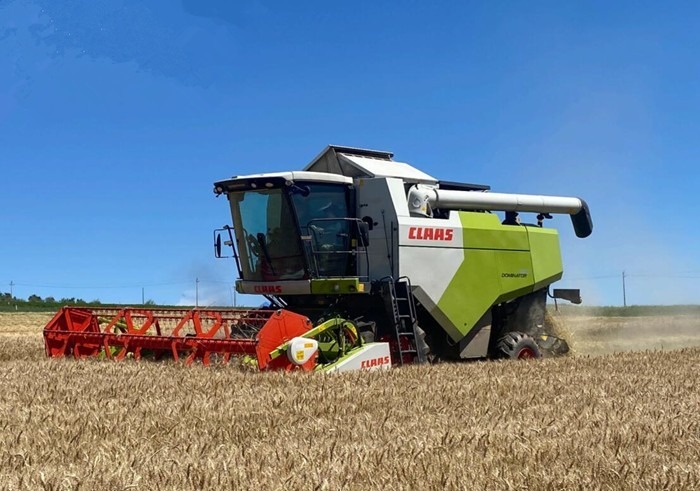
Five Types of Harvester Accident Hazards and Preventive Measures
The autumn harvest period sees a high incidence of agricultural machinery accidents, making accident prevention critically important. Please pay close attention to the five common‑occurring accidents described below. Let us reduce hazards and enhance safety, cut down accidents and bring more joy during this busy autumn farming season!
1. Crushing Accidents
Hazards: During harvester operations, assistants and other personnel enter the working area to pick corn or inspect harvesting progress. Due to the operator’s blind spots, crushing accidents are likely to occur when the harvester reverses.
Preventive measures: Before reversing, operators shall give warning signals, observe surroundings thoroughly, confirm safety and reverse slowly. No personnel are allowed to approach the machine while it is moving forward or backward.
2. Pinching Accidents
Hazards: During grain‑unloading operations, assistants or bystanders stand close to the harvester or go under the grain tank to pick up fallen corn cobs. When the grain tank retracts after unloading, personnel underneath may get pinched and injured by the bottom of the tank.
Preventive measures: Operators shall guide all surrounding personnel away before starting grain‑unloading. Prior to harvesting, operators shall conduct safety outreach, and strictly forbid unauthorized personnel from entering the operating zone while the machine is running.
3. Entanglement Accidents
Hazards: Operators or assistants manually clear clogged corn cobs at the ear‑discharge outlet or tangled corn stalks on the header without shutting down and turning off the engine. The snapping rolls and discharge rollers may catch and drag in personnel, causing severe injury.
Preventive measures: When tangling or blockages occur on the header, peeler or straw chopper discharge outlet, shut down the engine and wait for all moving parts to come to a complete stop before clearing obstructions; never perform manual clearing while components are rotating. During grain unloading, do not allow anyone to enter the grain tank or use hard tools such as shovels to push grain. Keep hands away from grain outlets and straw discharge openings when removing blockages.
4. Spontaneous Combustion Accidents
Hazards: Operators fail to clear crop residues and straw debris accumulated on the engine and exhaust pipe of the combine harvester. Prolonged operation overheats the engine and exhaust manifold, which may trigger spontaneous combustion.
Preventive measures: Routinely clear crop fragments from exposed engine components, exhaust pipes, radiator grilles and high‑speed moving parts to avoid fire risks. Inspect electrical components regularly to prevent fires caused by aging or short‑circuited electrical parts.
5. Crush‑from‑Overturn Accidents
Hazards: When operating or transferring near gullies, field ridges or hidden pits, a harvester may tip over. If the operator jumps out on the tipping side to escape, secondary crushing injuries may happen.
Preventive measures: In the event of an impending harvester overturn, operators must stay calm. Never jump toward the tipping side, as the machine may fall onto you and cause crushing injury.