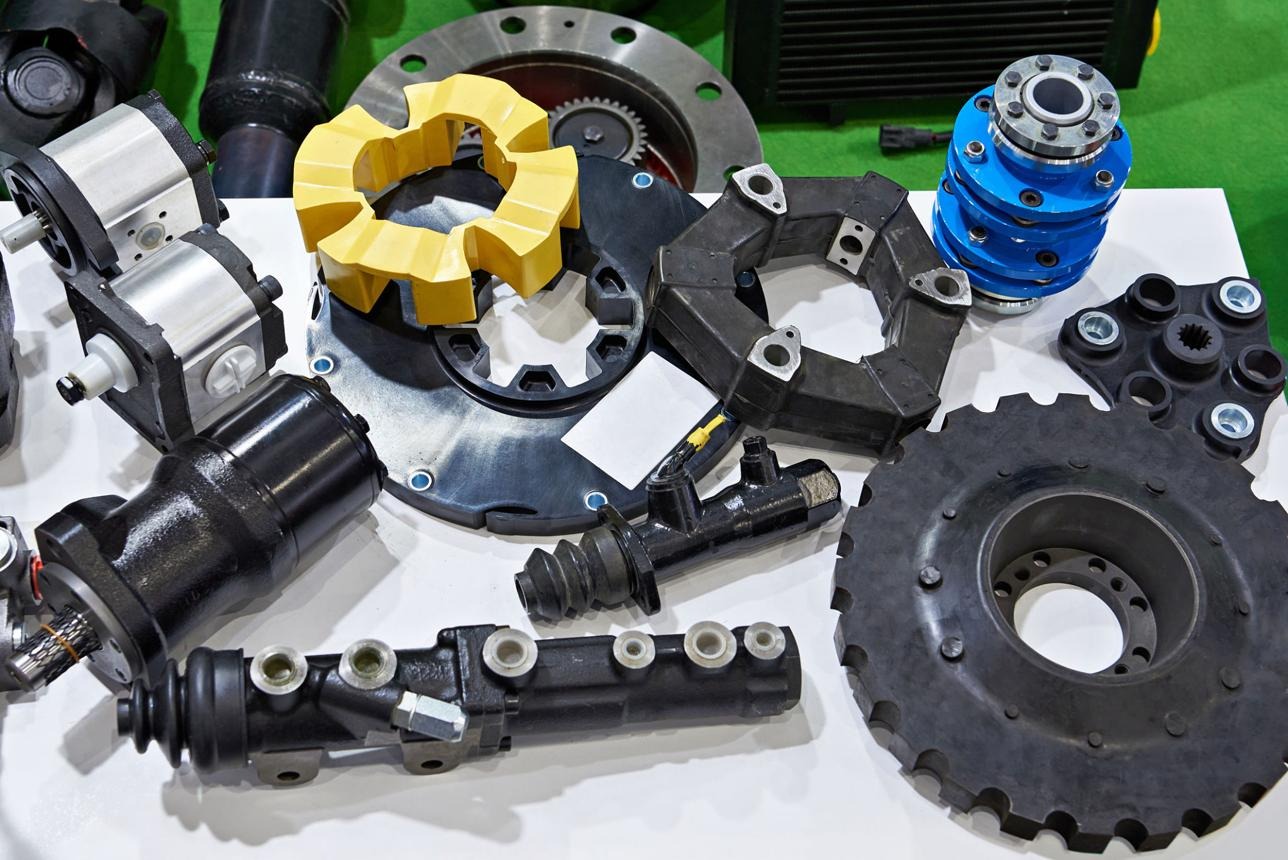
China’s Agricultural Machinery Spare Parts Exports to West Asia Continue to Grow, Driven by Aftermarket Demand and Equipment Aging
Introduction: Stable Growth in China–West Asia Agricultural Trade
In recent years, China’s exports of agricultural machinery spare parts to West Asia have shown steady growth, supported by the region’s expanding large-scale farming operations, aging imported machinery fleets, and strong demand for cost-effective aftermarket components.
West Asia—including countries such as Turkey, Iran, Iraq, Saudi Arabia, and Jordan—has become an important destination for Chinese agricultural machinery components. According to international trade databases covering HS codes related to agricultural machinery parts (including HS 8432, 8433, and 8436 categories), China remains one of the top global exporters of agricultural machinery components, with a significant share flowing to developing agricultural markets.
Industry trade data from recent years indicates that China’s total exports of agricultural machinery and related components have reached several billion USD annually, with agricultural machinery parts accounting for a rapidly increasing proportion of this total. Within this structure, West Asia represents one of the fastest-growing regional markets.
1. West Asia Agricultural Mechanization Expands Rapidly
West Asia’s agricultural development is characterized by large-scale irrigation farming, mechanized wheat and barley production, and increasing investment in food security programs.
Key countries include:
- Turkey
- Iran
- Iraq
- Saudi Arabia
These countries rely heavily on imported agricultural machinery, particularly from European and North American brands. As machinery fleets expand, the demand for spare parts grows continuously.
2. Dominant Agricultural Machinery Brands in West Asia
The installed base of agricultural machinery in West Asia is dominated by global OEM manufacturers:
- John Deere
- CLAAS
- Case IH
- New Holland Agriculture
- Massey Ferguson
- Horsch
These brands dominate key segments such as:
- Combine harvesters
- Large tractors (150–500 HP range)
- Air seeders and drills
- Irrigation-supported mechanized farming systems
Because many machines in operation are more than 5–15 years old, spare parts consumption is structurally high.
3. China’s Export Structure of Agricultural Machinery Parts
China is a major global supplier of agricultural machinery components, including:
- Wear parts for seeding systems
- Disc blades and coulters
- Bearings, bushings, and shafts
- Rubber damping components
- Hydraulic and linkage parts
- Harvesting machine consumables
According to HS-based trade statistics for machinery parts (not limited to agriculture), China exported over $1.5 billion worth of machinery components globally in recent years, with major destinations including the United States, Russia, India, and multiple West Asian markets.
Within agricultural machinery categories specifically (HS 8433 group), China’s exports reached approximately $3 billion annually in recent years, reflecting strong global demand for harvesting and seeding equipment components.
Although exact West Asia breakdown varies by year and classification, multiple trade datasets consistently show that countries such as Turkey, Iran, and Iraq are among the key importers of Chinese agricultural machinery parts.
4. Why West Asia Relies Heavily on Imported Spare Parts
The growth of Chinese agricultural spare parts exports to West Asia is driven by several structural factors:
1) Aging machinery fleets
A large proportion of imported machinery in the region has been in use for over 7–12 years, increasing replacement frequency.
2) Harsh working conditions
High temperature, dust, and dry soil conditions accelerate wear of discs, openers, and mechanical joints.
3) Cost sensitivity
Farmers and distributors increasingly prefer aftermarket components due to significant cost differences compared with OEM parts.
4) Limited local manufacturing capability
While some countries have domestic mechanical workshops, precision agricultural components still rely heavily on imports.
5. Key Spare Parts Categories Exported from China
Chinese suppliers export a wide range of agricultural machinery parts to West Asia. The most demanded categories include:
Seeding System Parts
- Disc openers
- Seed tubes
- Gauge wheels
- Closing wheels
- Scrapers and seed boots
Soil Engagement Parts
- Coulters
- Cutting discs
- Wear plates
- Tillage blades
Mechanical Components
- Bushings and pins
- Shafts and couplings
- Bearing housings
- Rubber dampers
These components are widely compatible with machinery used in the region, especially European seeding systems and North American tractors.
6. Turkey and Iran: The Core Import Markets
Turkey
Turkey is one of the most important agricultural machinery markets in the region. It has a strong domestic agricultural equipment industry but still relies heavily on imported spare parts for high-end machinery systems.
Turkey also serves as a regional distribution hub, re-exporting components to neighboring countries.
Iran
Iran has a large agricultural sector but faces import constraints and supply chain challenges. This has significantly increased demand for aftermarket and compatible spare parts.
Iran’s market is particularly sensitive to:
- Availability of replacement parts
- Price competitiveness
- Compatibility with European machinery platforms
7. Role of Chinese Suppliers in the Supply Chain
Chinese manufacturers have become increasingly important in the global agricultural aftermarket due to:
- Flexible manufacturing capability
- Ability to replicate OEM-compatible designs
- Cost advantage
- Short production cycles
- Wide product coverage
Among these suppliers, Dawopu has positioned itself as a manufacturer specializing in agricultural machinery spare parts, including:
- CNC-machined agricultural components
- Wear-resistant metal parts
- Seeder system replacement components
- Rubber damping and vibration parts
- Customized parts based on drawings or samples
Dawopu focuses on serving distributors and agricultural machinery service companies that require stable, cost-effective replacement components compatible with widely used OEM equipment in West Asia.
8. Logistics and Trade Channels
Exports from China to West Asia typically rely on:
- Sea freight via major Chinese ports (Qingdao, Shanghai, Ningbo)
- Land logistics through Central Asia routes (for inland markets)
- Regional distributors in Turkey and UAE re-export hubs
Seasonal demand peaks are typically aligned with:
- Wheat planting season
- Harvesting season
- Pre-season maintenance cycles
9. Market Outlook: Continued Expansion of Aftermarket Demand
The West Asian agricultural spare parts market is expected to maintain steady growth due to:
- Continued expansion of mechanized farming
- Aging imported machinery fleets
- Increasing food security investments
- Strong preference for cost-efficient maintenance solutions
As agricultural production becomes more industrialized, the demand for reliable aftermarket supply chains will continue to increase.
Conclusion
China’s agricultural machinery spare parts exports to West Asia are supported by strong structural demand, driven by mechanized farming expansion and aging equipment fleets. Countries such as Turkey and Iran play a central role in regional consumption, while Iraq and Saudi Arabia continue to expand their mechanized agriculture sectors.
Within this growing market, suppliers like Dawopu are increasingly integrated into the global supply chain by providing cost-effective, compatible, and customizable agricultural spare parts that support continuous farm operations.
As West Asia continues to modernize its agricultural sector, the importance of stable international spare parts supply will only continue to rise.